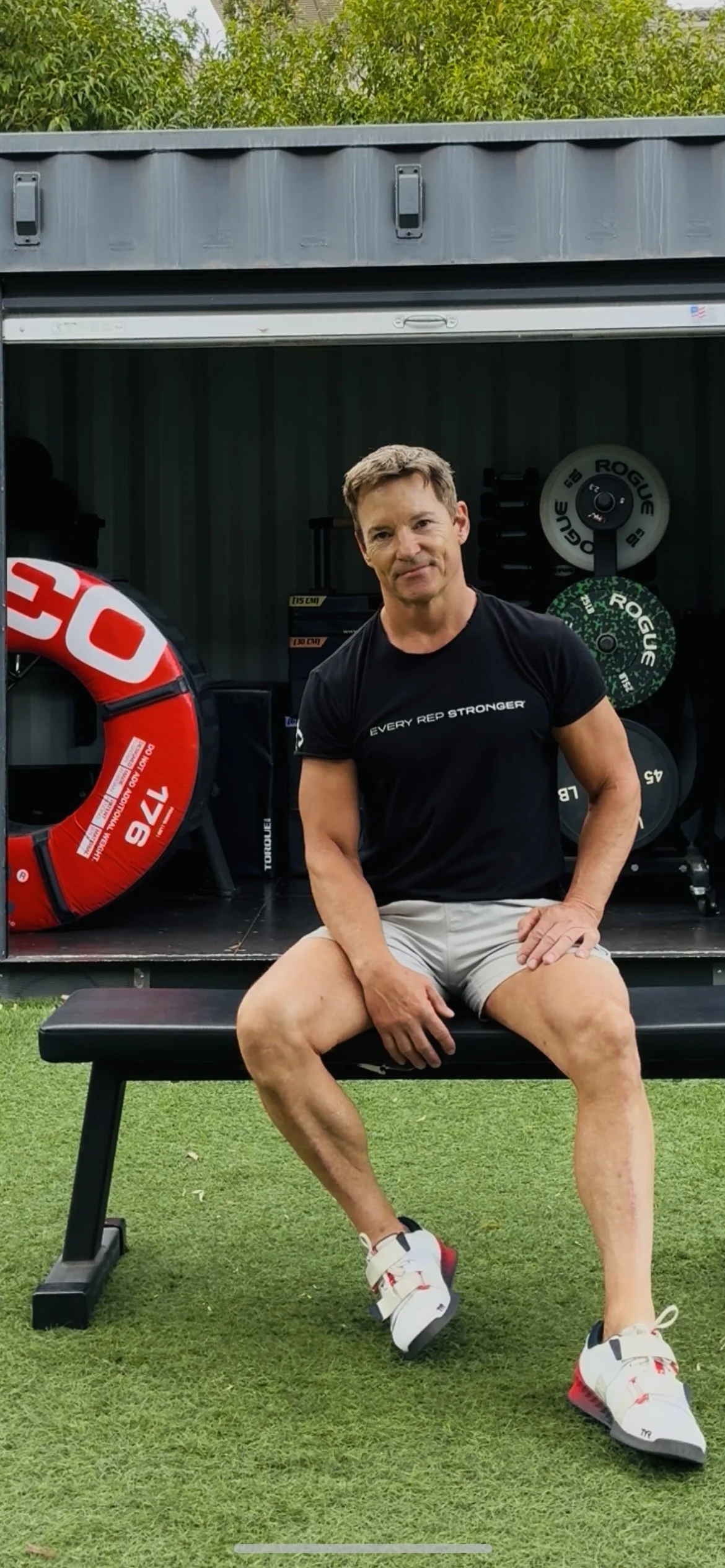
“The road to maintaining youth runs through the barbell.” - Doug McKay
Let’s start by addressing Squats and Deadlifts
Do back squats strengthen the spine or potentially cause damage to the spine?
Short answer: Back squats strengthen your spine when done correctly and with appropriate loading. They can stress or damage the spine when done poorly, excessively, or without proper preparation.
Here’s the clear breakdown.
How back squats strengthen the spine?
When performed with good technique, back squats act like resistance training for your spinal support system.
What gets stronger:
Spinal erectors (muscles that keep your spine upright)
Deep core stabilizers (transverse abdominis, multifidus)
Hip and trunk coordination, which reduces everyday injury risk
Why this matters:
A stronger, well-coordinated spine tolerates compressive forces better
Bone density in the vertebrae can improve (Wolff’s Law)
Better posture and resilience during daily activities (lifting, bending)
Research consistently shows that trained spines adapt and become more robust, not fragile.
When back squats can damage the spine
Problems arise when stress exceeds capacity.
Common risk factors:
Poor technique
Excessive spinal flexion (“butt wink” under load)
Loss of neutral spine
Too much load, too soon
Ego lifting
Rapid jumps in weight
Fatigue
Form breakdown near failure
Pre-existing spine issues
Acute disc injury
Unmanaged spinal stenosis or severe osteoporosisIn these cases, spinal tissues (discs, ligaments) may be overloaded faster than they can adapt.
Compression is not the enemy
A key misconception is that spinal compression is inherently bad.
The spine is designed to handle compression
What causes injury is poor force distribution, not load itself
Gradual loading improves tolerance—just like bones, tendons, and muscles elsewhere
Avoiding spinal load entirely often makes the spine weaker, not safer.
How to squat for spinal health
Practical guidelines:
Maintain a neutral spine throughout the lift
Brace your core before descending (think “360° tension”)
Use loads you can control with consistent technique
Progress gradually over weeks and months
Stop sets when form degrades—not when ego says one more rep
If needed, alternatives like front squats, goblet squats, or safety bar squats can reduce spinal shear while still strengthening the trunk.
Bottom line
Back squats do not inherently damage the spine.
Done well → they strengthen it
Done poorly or recklessly → they can injure it
The spine adapts to smart stress. Respect the process, and squats are one of the best tools for lifelong spinal resilience.
Squats or Deadlifts?
Short answer: Both—they do different but complementary things.
Long answer: which is “better” depends on your goal, body, and training age.
⸻
Why both is usually best
Squats
Best for:
• Quad strength and leg mass
• Knee and hip resilience
• Bone density (especially hips & spine)
• Carryover to daily tasks (standing, climbing, getting up)
Spine effect:
When done with good technique and appropriate load, squats strengthen the spine by training the core and spinal stabilizers under compression.
⸻
Deadlifts
Best for:
• Posterior chain (glutes, hamstrings, spinal erectors)
• Hip hinge strength (picking things up safely)
• Grip strength
• Total-body strength efficiency
Spine effect:
Deadlifts build spinal stability under shear, which is critical for injury prevention—as long as form and volume are controlled.
⸻
When one may be “better” than the other
Choose squats if:
• You have a history of low-back flare-ups
• Knee and hip health is a priority
• You want leg development with less nervous system fatigue
• You’re newer to lifting or returning after time off
Choose deadlifts if:
• You want maximal strength carryover to real life
• You sit a lot and need posterior-chain development
• You’re experienced and recover well
• You use variations (trap bar, RDLs)
⸻
For longevity & aging well (important part)
For older lifters, the best choice is usually:
• Squat more often
• Deadlift less often, but intelligently
Example weekly structure:
• Squat: 1–2× per week
• Deadlift or hinge: 1× per week or every 10–14 days
Use:
• Trap bar deadlifts
• Romanian deadlifts
• Rack pulls
instead of frequent max-effort c
⸻
The smartest approach
You don’t need to choose either/or.
Train both, but not equally heavy all the time.
A simple rule:
• Squat for volume
• Deadlift for quality
Personalized Coaching
Every program starts with an assessment of mobility, past or current injuries along with agreed upon goals so training is built around you specifically and not a one size fits all.
Note: We will also keep track of your top lifts in each category for several weeks in this initial phase. Adding a little weight each session to create the necessary stress. This is where you will make the most gains.
Again the initial focus will be to first get you stronger and then we layer from there while strength will always be the foundation of our fitness pyramid.
Strength for Every Age
From youth athletes to adults in their 80s - programs are structured so anyone can get stronger, improve mobility and increase athleticism.
We can fix this type of thinking in the next paragraph in one session.
“I’m too old and I got injured in the 3rd grade playing dodgeball and besides I finally found a doctor that said not to do any heavy lifting. Just experience atrophy and tiptoe my way through life.”
I’ve trained all ages including athletes in wheelchairs. I’ll get you stronger and I’m pretty confident we can fix any past injuries or current challenges. At a minimum we will work around them.
“Motion is Lotion”
Note: Increased bone density along with ligament, joint and tendon integrity.
This is best accomplished initially with a barbell and not a treadmill or single joint isolated “man bun” moves.
Those have their place - but not when it comes to building strength.
We want strong grips and strong hips.
You should maintain the mindset that you will strength train for the rest of your life..
Proven Methods
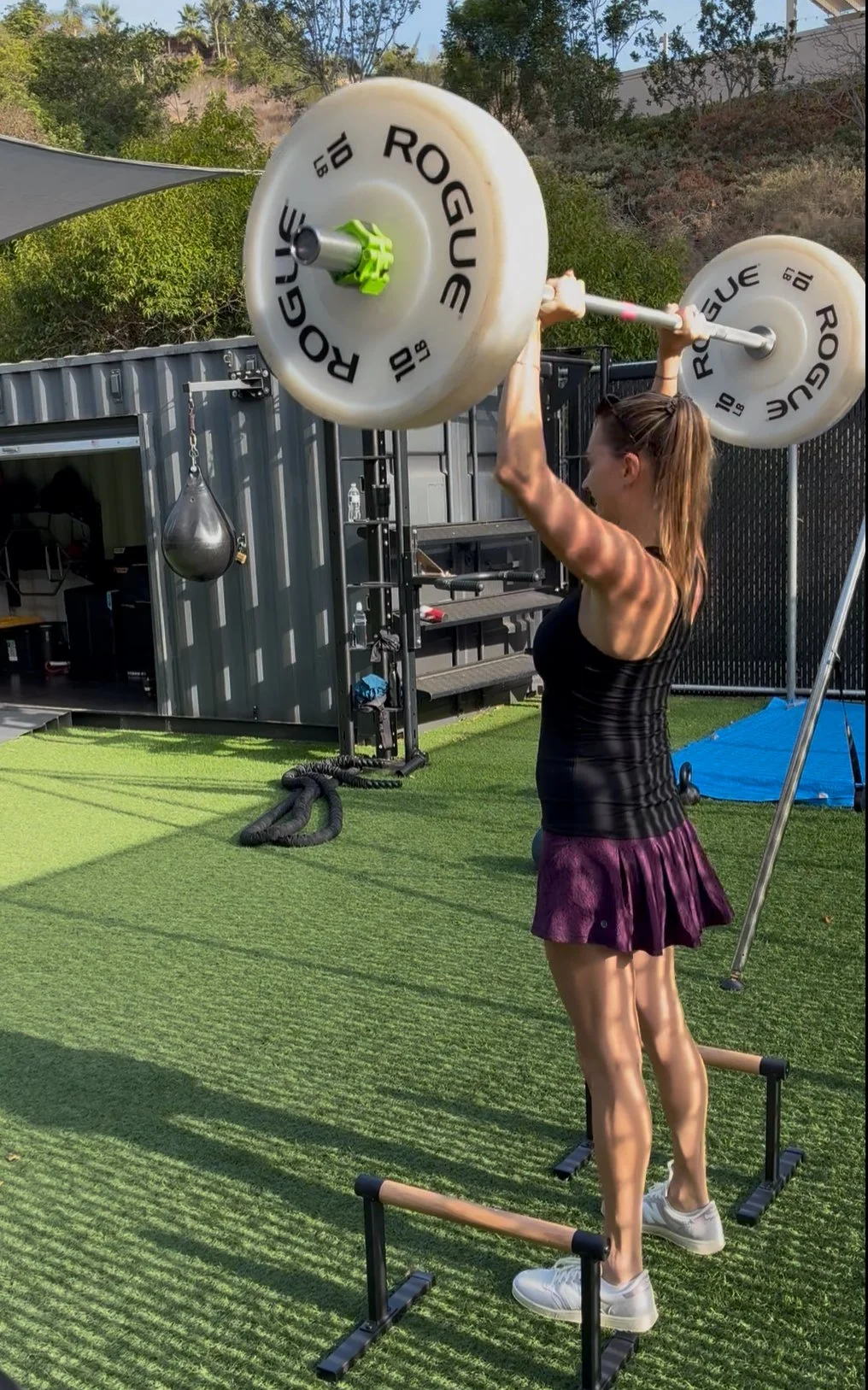
Training for strength is best accomplished with full body compound movements using a barbell. The barbell is the best piece of equipment because it can be progressively overloaded more efficiently than kettlebells or dumbbells. We will however utilize kettlebells and dumbbells once the initial phase has run its course.
Compound movements closely resemble real life in terms of balance where we pick an object up, pull it towards us, push it away or lift it over our head.
In other words the entire body moves as a unit - the way it was designed to.
Sitting on a machine with your back against a pad while watching TV or checking your phone does not.
Eventually we incorporate the Olympic Lifts or variations thereof for speed, athleticism and mobility.
Calisthenics and consistent mobility, rotational and Weck coiling work as well. In other words not just hinge movements forever.
Note: The combo of strength and explosiveness is not only key to athletic performance in your sport of choice - but also paramount in navigating through everyday life regardless of age or endeavors.
Example: Youth or adult - you need strength and quick reflexes to prevent a fall or to get out of an otherwise difficult situation .
What You’ll Get:
Increase is strength, athleticism and confidence.
You will soon be surprised what you can do.
Your first session is on me - let’s see if we’re a fit.
Call or text me directly (858) 414-1970